
Markdown copy of 2026-10-29 Jobs First 2025 results release.html, made 2026-10-29. The original is the authority. Skip to Main Content

Contact Us Translate
Settings
Default
High Contrast
Reset
Increase Font SizeFont Increase
Decrease Font SizeFont Decrease
×

Search
Menu
-
Industries
-
Resources
-
About
-
Newsroom
-
Search
Custom Google Search
Submit
Close Search
Governor Newsom’s statewide Jobs First investments created more than 61,000 jobs, trained more than 142,000 workers in 2025
Feb 3, 2026 | Press Release
**What you need to know:**Governor Newsom is driving historic, locally-informed economic growth through the California Jobs First initiative, investing nearly $1.6 billion in 2025 across all 13 economic regions and creating tens of thousands of new jobs, sparking business development, and advancing new high-impact projects.
ORANGE COUNTY – Today, Governor Newsom continued his California Jobs First tour in Orange County, highlighting the nearly $1.6 billion in investments from 2025 that went to train more than 142,000 workers and help create more than 61,000 new jobs across California’s 13 economic regions. This first-of-its-kind initiative is accelerating economic momentum across the state by empowering regional strategies, investing in high-growth sectors and expanding access to good-paying jobs.
These historic investments were announced alongside the celebration of Orange County’s Jobs First regional plan — which will help advance life science, high-tech, advanced and precision manufacturing, and travel and tourism in the region.
“California is proving once again that when we invest in people and innovation, we build an economy that works for everyone. Jobs First is driving historic progress in every region of the state by backing regional priorities, doubling down on key industries, and creating opportunities for Californians where they live and work.
These plans were built from the ground up by local partners, for their communities. From tribal nations and rural regions to major economic hubs, California is leading the nation with economic development shaped by the people it’s meant to serve.”
— Governor Gavin Newsom
California Jobs First: Bold vision, realized locally
In 2021, Governor Newsom launched a statewide economic development planning process which became California Jobs First in 2023. The objective was to create good-paying, accessible jobs and sustainable economic growth across the state’s 13 regions, with each region launching a planning body — or collaborative — with representation from a wide variety of community partners, including labor, business, local government, education, environmental justice, community organizations, and more. The collaboratives then wrote their own data-driven, community-led economic plans, including identifying strategic industry sectors.
Launched in early 2025, the California Jobs First Economic Blueprint laid out a statewide economic vision anchored in ten strategic industry sectors and informed by those 13 region-specific plans. Since then, funding has flowed into communities across California, growing the economy and creating job opportunities up and down the state.
Notable state investments and activities from the past year include:
✅Regional Investment Initiative:
- Implementation Phase: In August 2025 $80 million was awarded to 11 projects spanning 7 regions as part of the Regional Investment Initiative’s first phase of implementation funding. Funding was awarded to four project clusters, focused on sectors including aerospace and defense, life sciences, agtech and farm equipment.
- Tribal Phase: In June 2025, the state awarded $15 million to 14 California Native American tribes to support economic development initiatives, job training programs, environmental stewardship projects, business growth and research and development.
- Wildfire Relief: In February 2025, $3 million was awarded to the LA Jobs First Collaborative to support the region in recovering from the wildfires that impacted the Altadena and Pacific Palisades communities. This funding is supporting a campaign to promote the local tourism industry and small businesses community, as well as quarterly comprehensive economic impact reporting and analysis.
✅California Competes Tax Credit: Over the course of 2025, California awarded tax credits to 21 companies choosing to expand or relocate in the state, spurring $2.56 billion in capital investment and creating 4,591 new jobs**.**
✅California Film & Television Tax Credit: In 2025, tax credits were awarded to 155 film and television projects, which are collectively expected to generate nearly $5 billion in economic activity and 33,391 cast and crew jobs across 6,292 filming days.
✅Employment Training Panel: In 2025, the panel invested over $82 million through 299 contracts with California businesses to support the training of 70,544 workers.
✅ Apprenticeships: The Department of Industrial Relations (DIR) and its Division of Apprenticeship Standards (DAS) awarded over $91 million in 2025 to expand apprenticeship opportunities, benefiting more than 69,000 apprentices and pre-apprentices.
✅ High Road Training Partnerships (HRTP): The 2025 HRTP investment of $18.5 million aims to increase access to existing High Road jobs for underserved populations and create pathways for incumbent workers seeking job growth with High Road employers. These projects will train over 3,100 workers and are tailored to focus on one or more of the strategic sectors in their region(s) as identified in the Jobs First Blueprint.
✅California State Trade Expansion Program (STEP): Throughout the 2025 federal fiscal year, STEP grants supported 204 California small businesses, resulting in a reported $33 million in export sales and the creation or retention of 254 jobs. These export activities took place on every continent except Antarctica, highlighting the global reach of California’s small business community.
✅“Bet” Sector Investments: California is doubling down on its emerging “bet” sectors, including fusion and quantum. In November 2025, the state launched Quantum California, a new statewide initiative uniting government, academia and industry to accelerate quantum innovation, grow jobs and secure California’s leadership in this critical field. November also saw the first major gathering of the state’s fusion ecosystem at the 2025 California Fusion Energy Convening, signaling significant momentum in another frontier technology sector.
“This year showed what California can accomplish when state agencies, regional collaboratives and local partners rally around shared priorities,” said GO-Biz Director Dee Dee Myers. “Jobs First is aligning sector investments and business development in ways that create measurable, lasting impact for communities up and down the state. The progress made in 2025 is only the beginning, and we look forward to supporting the next wave of high-impact projects across all thirteen regions.”
“Through California Jobs First, we’re strengthening the pathways that connect people to stable careers in growing industries. In 2025, we expanded training, apprenticeship, and regional partnerships across California,” said Stewart Knox, Secretary of the Labor & Workforce Development Agency. “This year, we’re scaling that work so more Californians can access clear routes into good-paying jobs.”
All these key investments from 2025 build on more than $286 million in prior years’ funding through the Regional Investment Initiative.
Advancing state-of-the-art sectors in Orange County
Today’s event, hosted at Medtronic, celebrated the implementation of Orange County’s Jobs First regional plan, which identified life science, high-tech, advanced and precision manufacturing and travel and tourism as priority sectors for their region.
The medical device technology (medtech) industry is a critical sector for the continued success and growth of Orange County’s regional economy, employing more than 21,000 workers. Across the state, there are more than 13,600 medtech companies, accounting for more than 30% of the medical device industry revenue across the United States.

Fostering Regional Engagement and Collaboration
Throughout 2025, the California Jobs First Council, including nine Cabinet-level agency principals collaborating to promote economic development, met with leaders in four of the 13 regions — Redwood Coast, Bay Area, Capitol and Southern Border — to hear directly from regions about their economic priorities, Tribal economic development needs and emerging opportunities across communities.
And as part of the Regional Investment Initiative award process, the Council also hosted an Investment Summit in San Francisco in June that saw 35 project leads pitch bold ideas to private philanthropy and funders, sparking funding for the innovations shaping the next wave of California’s economy.

Strengthening Workforce Alignment
2025 marked a major milestone in workforce development with the release of the Master Plan for Career Education by the Labor and Workforce Development Agency. Designed to complement the Jobs First initiative, the Master Plan aligns education, training and career pathways with the jobs envisioned in each region, ensuring California’s workforce is prepared to meet the needs of fast-growing industries. The Plan aims to expand access to good-paying careers by serving 500,000 apprentices by 2029.
Accelerating building and development
Governor Newsom signed groundbreaking legislation in 2025 to cut red tape and streamline construction, building on the past six years of work with the legislature. Namely, AB 130 and SB 131 that provide regulatory relief for many critical housing and economic development projects, including for advanced manufacturing, from CEQA.
In addition, the Governor’s Office of Land Use and Climate Innovation launched a process to update the state level General Plan Guidelines, including updated guidance for economic development elements.
On top of that, the recently launched Business Ready Sites Program features an interactive web-mapping tool showcasing fully zoned and entitled sites suitable for headquarters, research & development and industrial manufacturing facilities.
Looking ahead
The California Jobs First initiative will continue driving impact this upcoming summer with $45 million in implementation funding through the Regional Investment Initiative, which will help regions expand access to job training and business development. The Jobs First team will also host a second investment summit planned for April 2026, where regions will pitch their highest-impact projects to attract additional private and philanthropic funding.
California’s economic dominance
California remains the fourth-largest economy in the world. With an increasing state population and recent record-high tourism spending, California is the nation’s top state for new business starts, access to venture capital funding, and manufacturing, high-tech, and agriculture.
About GO-Biz The Governor’s Office of Business and Economic Development (GO-Biz) serves as the State of California’s leader for job growth and economic development efforts. GO-Biz offers a range of services to business owners including: attraction, retention and expansion services, site selection, permit streamlining, clearing of regulatory hurdles, small business assistance, international trade development, assistance with state government, and much more. For more information visit the GO-Biz website.
Willie Rudman Deputy Director of Communications Email, HERE
Explore more articles by category: GO-Biz News | CalOSBA News | Press Releases | Opinion Editorials | Statements
GO-Biz Programs
Cannabis Equity Grants for Local Jurisdictions
California Civic Media Program
California Community Reinvestment Grants
California Competes Tax Credit
California Film and TV Tax Credit
California State Trade Expansion Program
Regional Investment Initiative
State Programs
Statewide Disaster Response Tool
Leadership
GO-Biz Team
Back to Top Accessibility Conditions of Use Contact Us Disclaimer Privacy Policy Terms of Use


[ ]
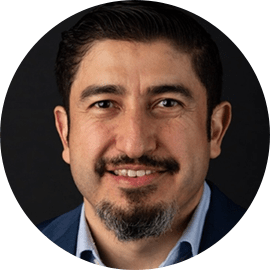
Arturo Carmona
President of the Latino Media Collaborative
Arturo Carmona serves as the Managing Partner of Tzunu Strategies and heads the Latino Media Collaborative. He has appeared in in media outlets such as MSNBC, ABC, CNN, Time Magazine, The New York Times, The Los Angeles Times, Univision, Telemundo, USA Today, NPR, La Opinion, and many others. Hispanic Magazine honored him with the Hispanic Achievement Award. He is the current Sr. Strategy Advisor to ImpreMedia and served as a Digital Media and Strategic Communications Advisor to the Andres Manuel Lopez Obrador for President campaign (Mexico) and the Deputy Political Director for the Bernie Sanders for President campaign. He was the Executive Director of Presente.org and as the founding Executive Director of the Council of Mexican Federations.
This will close in 0 seconds
[ ]

Chuck Corra
Associate Director of Policy & Advocacy at LION Publishers
Chuck Corra designs and leads advocacy efforts on behalf of local independent online news businesses at LION Publishers, helping drive policy outcomes at the state and national levels across the United States. Chuck’s professional background spans public affairs, issue advocacy, strategic research, and legal fields. Most recently, he advised renewable energy developers on navigating community support for deploying wind and solar energy in rural communities. Chuck graduated with honors from Michigan State University College of Law, and currently lives in Chattanooga, Tennessee.
This will close in 0 seconds
[ ]

Martha Diaz Aszkenazy
Publisher of the San Fernando Valley Sun & El Sol Newspapers
Martha Diaz Aszkenazy was born in the San Fernando Valley and raised in the city of San Fernando where she headquartered the San Fernando Valley Sun/el Sol newspaper after purchasing it over 24 years ago. She grew up in San Fernando attending local schools before enrolling at Loyola Marymount University where she received her bachelor’s in business administration. Volunteering and giving back to her community is very important to Martha and throughout the years she has served on numerous boards and commissions, including as Treasurer for the California News Publishers Association, Chair of the National Newspapers Association, and a member of the Latino Media Collaborative.
This will close in 0 seconds
[ ]
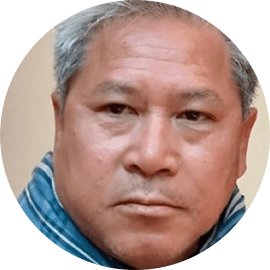
Julian Do
Co-Director of American Community Media
Julian Travis Do is the Co-director of American Community Media, California’s largest coalition of 300+ ethnic media outlets, where he leads initiatives focused on long-term sustainability of local journalism, including editorial and digital media capacity development. With extensive experience in cross-sector coalition building, Julian coordinates efforts among more than 130 community-based organizations to address media equity and the systemic challenges facing local news. He has played a pivotal role in major legislative and industry milestones, including advocacy for multiple media sustainability legislative bills and the coordination of historic multi-year agreements to support the local news ecosystem. His work also includes managing infrastructure upgrades for ethnic and community media markets to ensure state resources effectively reach prioritized populations. Julian currently serves on the Advisory Board for the Local News Fellowship program at the UC Berkeley Graduate School of Journalism.
This will close in 0 seconds
[ ]

Sean Emery
Sean Emery, President of the Media Guild of the West & Journalist at SCNG
Sean Emery is president of Media Guild of the West, a local of The NewsGuild-CWA that represents hundreds of journalists and media workers at the Los Angeles Times, the Desert Sun, the Southern California News Group, and other news outlets across California, Arizona and Texas. Sean is also a working journalist who has written for the Orange County Register since 2006 and currently covers courts, crime and public safety for the Register and other papers in the Southern California News Group.
This will close in 0 seconds
[ ]
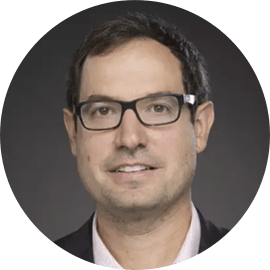
Jeff Glasser
General Counsel at the Los Angeles Times
Jeff Glasser is General Counsel of the Los Angeles Times. As head of the company’s legal department, Glasser handles newsroom counseling, litigation, intellectual property, contract and commercial matters, privacy, compliance and other legal issues. In addition, he represents the Los Angeles Times in legislative and policy matters in California and Washington, D.C. Glasser is a board member and chair of the Governmental Affairs Committee for the California News Publishers Association and a member of the Legal Affairs Committee for the News Media Alliance. Before joining the company in 2013, Glasser practiced law at Davis Wright Tremaine LLP, worked as a senior editor at U.S. News & World Report and served as Bob Woodward’s researcher on “Shadow: Five Presidents and the Legacy of Watergate.” A graduate of Yale University, Glasser received his law degree from the University of California, Berkeley School of Law.
This will close in 0 seconds
[ ]
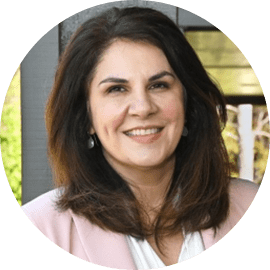
Marian Kaanon
President and CEO of the Stanislaus Community Foundation
Marian Kaanon is the President & CEO of Stanislaus Community Foundation. A first-generation Assyrian American, Marian was born in Iraq. She immigrated with her family to Canada at age 7, and then the U.S. as a high school student. After graduating from UC Davis, Marian began a career that spanned broadcast journalism, public affairs and nonprofit management. Marian joined Stanislaus Community Foundation as CEO in late 2012. Stanislaus Community Foundation is a place-based funder that provides grants and scholarships to community organizations in Stanislaus County. To date, the organization has invested over $63 million in local nonprofits. During Marian’s tenure, Stanislaus Community Foundation has quadrupled its assets under management and tripled its grantmaking, supporting programs in education, economic opportunity and civic engagement. Coming out of the pandemic, Stanislaus Community Foundation launched Stanislaus 2030, an inclusive economic development sprint focused on creating quality jobs, which secured over $20M in state and federal funds in the local region. She currently chairs the Board of Directors for the League of California Community Foundations.
This will close in 0 seconds
[ ]

Julie Patel Liss
Head of Journalism, California State University, Los Angeles
Julie Patel Liss is the head of journalism and an associate professor at California State University, Los Angeles. She conducts investigative reporting projects with students for local news outlets and established the university’s community news outlet, which reports on under-covered neighborhoods in East and South Los Angeles where Cal State LA students come from. Julie worked as an investigative reporter at nonprofit news outlets such as the Center for Public Integrity and D.C.’s National Public Radio affiliate, and as a reporter at the South Florida Sun Sentinel and San Jose Mercury News. Her beats over the years have included education, race and demographics, utilities, insurance and federal politics. Her coverage has earned over 15 awards and honors. Julie is a proud alumna of the University of Chicago, Stanford University and AmeriCorps’ City Year program. She volunteers on several local and statewide boards, including the California College Media Association and the Asian American Journalists Association, Los Angeles. Julie was born in India, raised in Chicago and lives with her husband, also a journalist, and their two children in Long Beach. In her free time, she enjoys reading, cooking, running, dancing and spending time outdoors with her family.
This will close in 0 seconds
[ ]

Regina Brown Wilson
Executive Director of California Black Media
Regina Brown Wilson is a media entrepreneur and leading advocate for African American–owned news outlets in California. Since 2012, she has served as Executive Director of California Black Media, leading a statewide network of more than 30 print, digital, radio, and streaming platforms serving Black communities and advancing their participation in California’s media economy. Under her leadership, Wilson has led major public information campaigns on COVID-19 response, voter engagement, and emergency preparedness, partnering with state agencies to strengthen the role of ethnic, rural, and independent media in public outreach. She served on California’s 2020 Census Complete Count Committee and is a member of the African American Empowerment Council of California and the Sacramento NAACP. She serves as co-chair of the Minority-Owned Small Business Task Force, chair of the Black Women’s Collective Empowerment Council, and on the UC Berkeley School of Journalism Local News Fellowship advisory board.
This will close in 0 seconds
[ ]

Erik Cushman
Publisher of Monterey County Weekly
Erik Cushman is the publisher of Monterey County Weekly and Monterey County Now (the company’s digital platforms) and has been on staff since 1999. During Cushman’s tenure, the Weekly’s staff has earned hundreds of local, regional, and national awards for editorial content, design, newsletters and photography. Cushman was previously the General Manager at the Colorado Springs Independent (Sep 1997 - Mar 1999) and Publisher of the Missoula Independent (Feb 1991 - Mar 1997). He has served on the Advisory Committee of the Marina Technology Cluster, the Boards of Directors of First Night Monterey and the Monterey Peninsula Chamber of Commerce. Since 2015 he has been the Chair of the Monterey County Workforce Development Board. Cushman has also been a board member of the California News Publishers Association since 2016. He is a graduate of the University of Montana and is married to Kristin Cushman. They have two adult daughters; he and Kristin live in Pacific Grove.
This will close in 0 seconds